Restaurant Remodeling Checklist for Owners
A successful restaurant remodeling project requires more than choosing new finishes or updating your dining area. Careful planning helps reduce delays, control costs, and create a space that enhances both the customer experience and daily operations.
Whether you’re refreshing an existing restaurant or planning a complete restaurant renovation or restaurant build-out, having a detailed checklist can keep your project on track.
This guide walks restaurant owners through the essential steps to prepare for a successful remodel.
Why Remodel Your Restaurant?
A restaurant remodel can help you:
- Improve the dining experience
- Refresh your brand image
- Increase seating efficiency
- Enhance kitchen workflow
- Meet current safety and accessibility standards
- Attract new customers
- Encourage repeat business
A modern, well-designed restaurant creates a positive first impression and supports long-term business growth.
Restaurant Remodeling Checklist
1. Define Your Goals
Start by identifying what you want to achieve.
Ask yourself:
- Do I want to update the restaurant’s appearance?
- Do I need more seating?
- Is the kitchen layout efficient?
- Am I improving customer flow?
- Do I want to strengthen my brand image?
Clear goals will guide every decision throughout the project.
2. Set a Realistic Budget
Determine how much you’re comfortable investing before requesting estimates.
Include costs for:
- Construction
- Materials
- Fixtures and finishes
- Lighting
- Furniture
- Equipment
- Permits
- Contingency expenses
Setting aside 10–20% of your budget for unexpected costs is often a smart practice.
3. Evaluate Your Existing Space
Walk through your restaurant and identify areas that need improvement.
Look at:
- Dining room
- Kitchen
- Restrooms
- Entryway
- Waiting area
- Bar (if applicable)
- Storage areas
- Employee workspaces
Document maintenance issues and opportunities to improve efficiency.
4. Plan the Restaurant Layout
An effective layout improves both customer experience and staff productivity.
Consider:
- Seating arrangement
- Traffic flow
- Waiting area
- Server stations
- Kitchen access
- Takeout and delivery pickup areas
- ADA accessibility
The goal is to create a space that’s comfortable and easy to navigate.
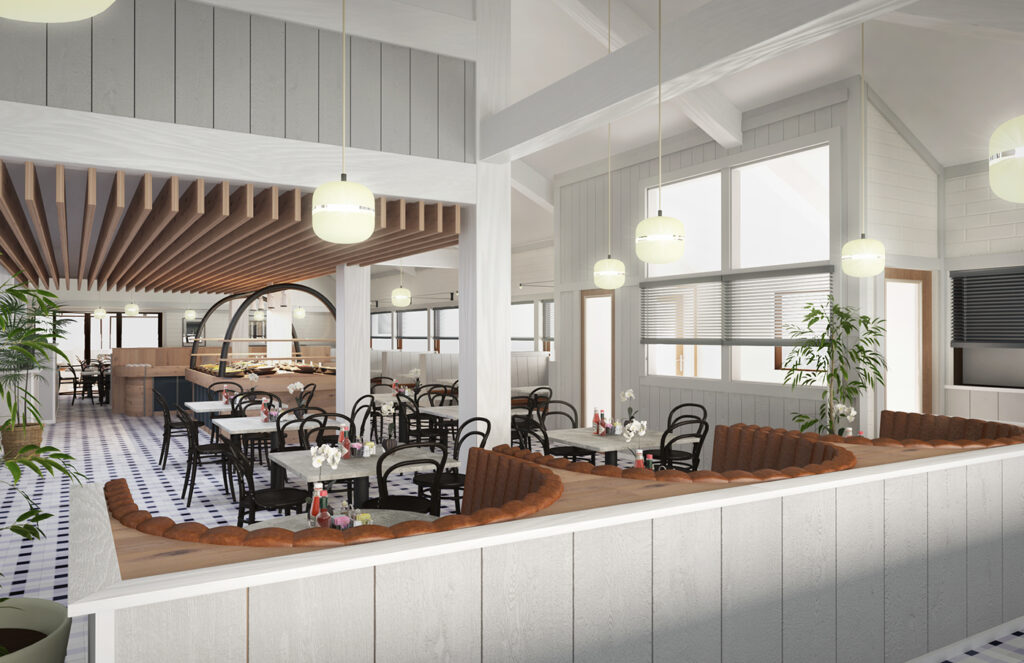
5. Upgrade the Dining Area
Customers notice the dining room first.
Popular upgrades include:
- New flooring
- Fresh paint
- Updated lighting
- Modern furniture
- Decorative finishes
- Acoustic improvements
- Updated ceiling features
These changes can significantly improve the restaurant’s atmosphere.
6. Improve the Kitchen
The kitchen is the heart of your business.
Review:
- Equipment layout
- Food preparation areas
- Storage capacity
- Ventilation
- Workflow efficiency
- Cleaning access
A well-designed kitchen helps employees work more efficiently and safely.
7. Update Lighting
Lighting influences both ambiance and functionality.
Consider:
- LED lighting
- Accent lighting
- Decorative fixtures
- Task lighting in work areas
- Outdoor lighting
The right lighting creates a welcoming environment while reducing energy costs.
8. Choose Durable Materials
Restaurants experience constant use, so select commercial-grade materials designed for durability.
Examples include:
- Slip-resistant flooring
- Durable countertops
- Easy-to-clean wall finishes
- Commercial-quality seating
- Moisture-resistant materials
Durable finishes reduce long-term maintenance costs.
9. Refresh Your Brand Identity
A remodel is an opportunity to reinforce your brand.
Consider updating:
- Interior colors
- Signage
- Menu boards
- Decorative elements
- Exterior appearance
- Customer waiting areas
A consistent design helps create a memorable dining experience.
10. Verify Code Compliance
Before construction begins, confirm that your project meets applicable building and accessibility requirements.
This may include:
- Fire safety systems
- Emergency exits
- ADA accessibility
- Electrical systems
- Plumbing
- Ventilation
Working with an experienced contractor helps simplify the process.
11. Minimize Business Disruption
Plan your remodeling schedule carefully.
Options may include:
- Remodeling in phases
- Working after business hours
- Scheduling construction during slower seasons
- Temporarily closing specific areas instead of the entire restaurant
Proper scheduling helps reduce downtime.
12. Hire an Experienced Restaurant Remodeling Contractor
Choosing the right contractor is one of the most important decisions you’ll make.
Look for a company with experience in:
- Restaurant remodeling
- Restaurant renovations
- Restaurant build-outs
- Commercial construction
- Project management
Ask for references, review previous projects, and request a detailed proposal before signing a contract.
Common Restaurant Remodeling Mistakes to Avoid
Avoid these common issues:
- Starting without a clear budget
- Choosing materials based only on price
- Ignoring customer traffic flow
- Underestimating project timelines
- Forgetting future maintenance needs
- Hiring inexperienced contractors
- Failing to plan for business operations during construction
Careful planning helps prevent costly delays and unexpected expenses.
Benefits of Professional Restaurant Remodeling
A professionally managed remodel can:
- Improve customer satisfaction
- Modernize your restaurant
- Enhance employee efficiency
- Increase seating functionality
- Support your brand image
- Extend the life of your facility
- Improve operational workflow
A well-designed space benefits both customers and staff.
Why Choose Commercial Remodeling Inc.?
At Commercial Remodeling Inc., we specialize in restaurant remodeling, restaurant renovation, and restaurant build-out projects throughout Texas. Our experienced team works with restaurant owners to create functional, attractive spaces that improve the dining experience while minimizing disruptions to daily operations.
Whether you’re updating a small café, a family restaurant, or a large dining establishment, we provide customized remodeling solutions designed around your goals and budget.
Frequently Asked Questions
What should be included in a restaurant remodeling checklist?
A complete checklist should include budgeting, layout planning, kitchen improvements, dining room updates, lighting, materials, permits, code compliance, and contractor selection.
How long does restaurant remodeling take?
Project timelines vary depending on the size and complexity of the renovation. Smaller updates may take a few weeks, while larger remodels or build-outs can take several months.
Can my restaurant stay open during remodeling?
In many cases, yes. Remodeling can often be completed in phases or scheduled during off-hours to reduce business interruptions.
Is restaurant remodeling worth the investment?
For many restaurant owners, yes. A well-planned remodel can improve the customer experience, refresh your brand, enhance operational efficiency, and help your business remain competitive.
Final Thoughts
A successful restaurant remodel starts with a solid plan. By following a comprehensive checklist, setting a realistic budget, and partnering with an experienced commercial remodeling contractor, you can create a space that supports your staff, delights your customers, and positions your business for long-term success.
If you’re planning a restaurant remodeling, restaurant renovation, or restaurant build-out project in Texas, Commercial Remodeling Inc. is ready to help. Contact us today for a free consultation and let us bring your vision to life.